
Opening the nation's postal heritage to the world
How The Postal Museum turned decades of born-digital records into a public, searchable discovery experience with Preservica — opening its collections to staff and the world for the first time.


Decades of records now discoverable
Born-digital collections opened to staff and the public for the first time
Public Records access duties met
The museum can meet the legal obligation to open records at the 20-year mark
Standardized & consistent metadata
Asset-level metadata guides rapid and easy researcher discovery
A 500-year archive meets its born-digital future
The Postal Museum is an independent charity in central London, home to permanent and temporary exhibitions and the much-loved Mail Rail ride. Behind the galleries sits an extraordinary archive spanning the records of Royal Mail, Post Office Limited and the museum itself — with the earliest item dating back to 1637.
Most of that collection is physical, but a growing volume is born-digital: oral histories, stamp artwork, contemporary collecting projects and transferred business records. The bulk of the archive holds Public Record status under the Public Records Act, carrying clear duties to collect, preserve and - crucially - provide access.
In September 2023, led by Digital Preservation Archivist Helen Dafter, the museum adopted Preservica Professional Plus to secure its born-digital collections and, for the first time, make them genuinely discoverable to staff and the public alike.

Making born-digital collections easy to find — and worth finding
Opening the archive online raised a set of access and discovery questions the sector is still learning to answer.
- Low public awareness of born-digital holdings. Audiences are comfortable with digitised material, but few expect — or know how to search for — born-digital collections.
- Unclear user expectations. With limited resource for focus groups, it was hard to know what the right questions were, or how people wanted to discover this content.
- Metadata built for archivists, not visitors. Descriptive metadata sat at folder level and assumed familiarity with archival hierarchies, making individual items hard to place and interpret.
- Being an early adopter. As one of the first to launch Preservica's Portal, the museum had few peers to benchmark against — and a lot to define from first principles.


Designing a discovery-first portal, tested with real users
Rather than wait for perfect answers, Helen built the Portal around evidence — using museum staff as a test cohort and letting their feedback shape the discovery experience.
- A shared metadata standard. Curatorial colleagues were involved from day one, and Dublin Core was adopted across both museum and archive material — with five mandatory fields (Title, Date, Creator, Identifier, Rights) to guarantee a baseline of context on every item.
- Staff-led user testing. An April 2025 survey scoped what colleagues expected to find, how they'd discover it, and what guidance they'd need — deliberately unconstrained by the tool. A follow-up survey in October 2025 measured real usage after the internal launch.
- Metadata moved to where discovery happens. Acting on feedback, descriptive metadata was expanded from folder level to asset level, displayed alongside each item so casual users can understand what they're looking at without navigating an archival tree.
- Access designed in, not bolted on. Downloads were enabled in response to unanimous demand, and closure periods and data-protection rules were respected throughout — meeting the museum's statutory duty to open records at 20 years.

What access & discovery unlocked
- Digital Collections Portal opened to the public in January 2026 — a major milestone
- Oral histories transformed into the most used online collection
- Statutory Public Records access duties met through controlled release
- Google Analytics reporting introduced to measure real-world usage
- Born-digital collections made discoverable to staff and public for the first time
- Asset-level Dublin Core metadata now guides discovery for non-specialists
- Portal content actively reused by curatorial and Marcomms teams
- Foundations laid for catalogue integration to deepen discovery
Key Takeaways
Lessons for opening born-digital collections
Access-first mindset
Discovery drives value. Designing for the visitor — not the archivist — turned a preserved archive into a used one.
Metadata that serves search
Standardising on Dublin Core and moving description to item level made collections findable and understandable.
Curators as partners
Involving curatorial colleagues from day one produced a shared metadata standard everyone could stand behind.
Test, launch, iterate
Real user feedback beat guesswork — and shipping a good portal now unlocked learning for the next.
The Postal Museum - born digital collections
The Postal Museum is an award-winning, accredited and independent museum in London - view their born digital collections here.
Explore Further
The capabilities behind the story
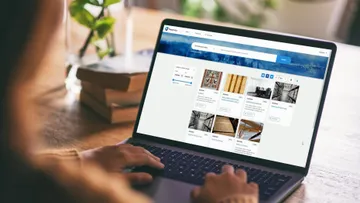
Access & discovery
Give staff, researchers and the public an intuitive, searchable window into your collections with the Preservica Portal.
The Active Digital Preservation™ Difference
Say hello to Active Digital Preservation™. Making the right sustainable & scalable long-term choice for your digital records.

New generation Professional edition
Professional edition combines the simplicity of our new generation user interface with added power, flexibility and storage capacity to ensure the long-term security, accessibility and authenticity of your digital collections